
Quick verdict: what makes Sagai dates different
Sagai dates are a local Saudi variety grown in the al-Aarid neighborhood around Riyadh. They ripen in the middle of the agricultural season, usually sell at a high price, and can be eaten fresh or dried.
The clearest difference from other varieties is size. A superior grade Sagai date weighs at least fourteen g, which is double the minimum for many premium varieties.
Sagai dates at a glance
| Detail | Information |
|---|---|
| Growing area | Al-Aarid neighborhood, around Riyadh |
| Shape | Thick, rectangular and oval |
| Color | Light yellow, golden brown when fully a date |
| Calories | 330 per 100 g |
| Grades | Superior, first, second |
Characteristics of Sagai dates
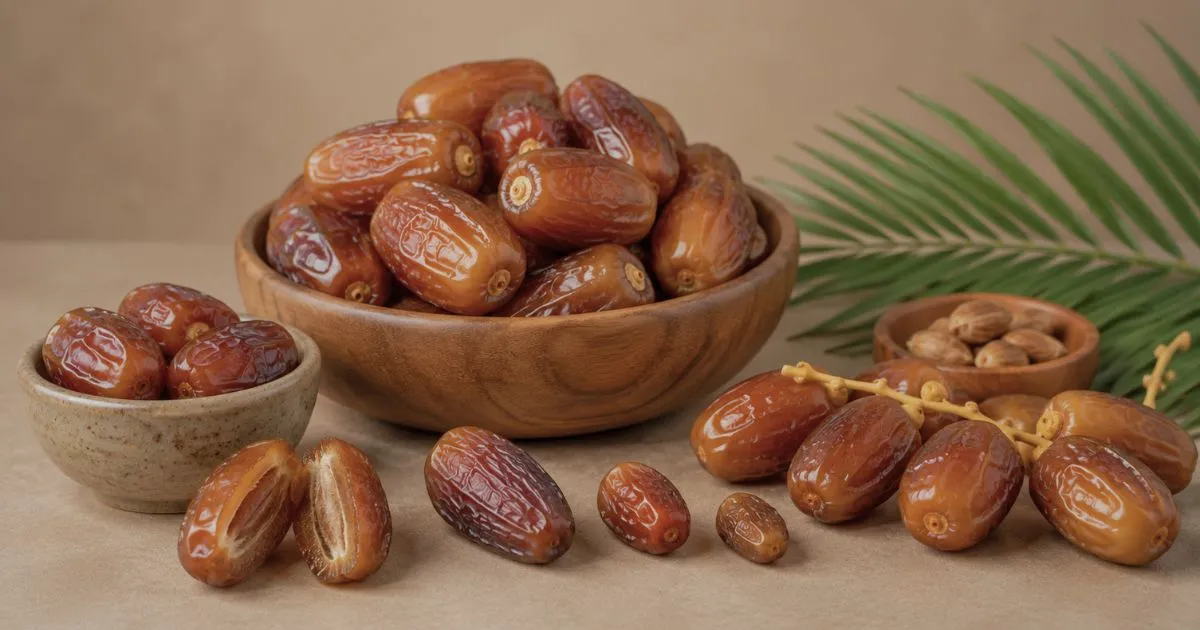
The fruit is rectangular and oval, thick, with a yellowish tip that turns outward and flat reddish edges. Overall the fruit reads light yellow, and it turns golden brown once it becomes a full date.
That two-tone appearance is how sellers identify it quickly on a market stall. For comparison across the market, see the main types of dates in Saudi Arabia.
Nutritional value of Sagai dates
Sagai are monosaccharide dates, meaning most of their sugar content is glucose and fructose. Each one hundred g contains forty-three mg of magnesium, thirty-six mg of calcium and 330 calories.
Those figures make them an energy-dense food rather than a light snack, which is why they appear so often during Ramadan. Working patterns in that month are covered in the Ramadan working hours guide.
Standards and inspection
Sagai dates fall under the standard specifications for date quality set by the Ministry of Environment, Water and Agriculture. The purpose is to support local and international trade, encourage high-quality production, improve returns for producers and exporters, and protect consumers.
They are inspected for compliance alongside sixteen other Saudi varieties, and the standards bind producers, traders, exporters and importers alike. Reference data on varieties is maintained by the National Center for Palms and Dates.
Categories and weights
Three categories apply. Superior requires at least fourteen g per date, with thirty-five dates in five hundred g. First grade requires at least ten g, with no more than fifty dates in five hundred g. Second grade sets the minimum standard at seven g per date, with seventy-one dates in five hundred g.
If a seller cannot tell you the grade, the count per half kilo will tell you anyway.
Where Sagai fits in the wider date economy
Riyadh sits at the center of both production and trade, visible each season in the opening of the dates season. Palm cultivation also supports crafts and materials described in the uses of palm trees, and surplus production feeds humanitarian shipments such as date aid to families in Syria.
Visitors buying dates in the capital often combine the trip with Al-Thumairi Street, the Wrth craft market or the heritage villages around Riyadh.
Final verdict
Sagai is a premium, large-fruit variety best judged by weight per date. Buy superior grade for gifting, first grade for daily eating, and check the count before you pay.
