
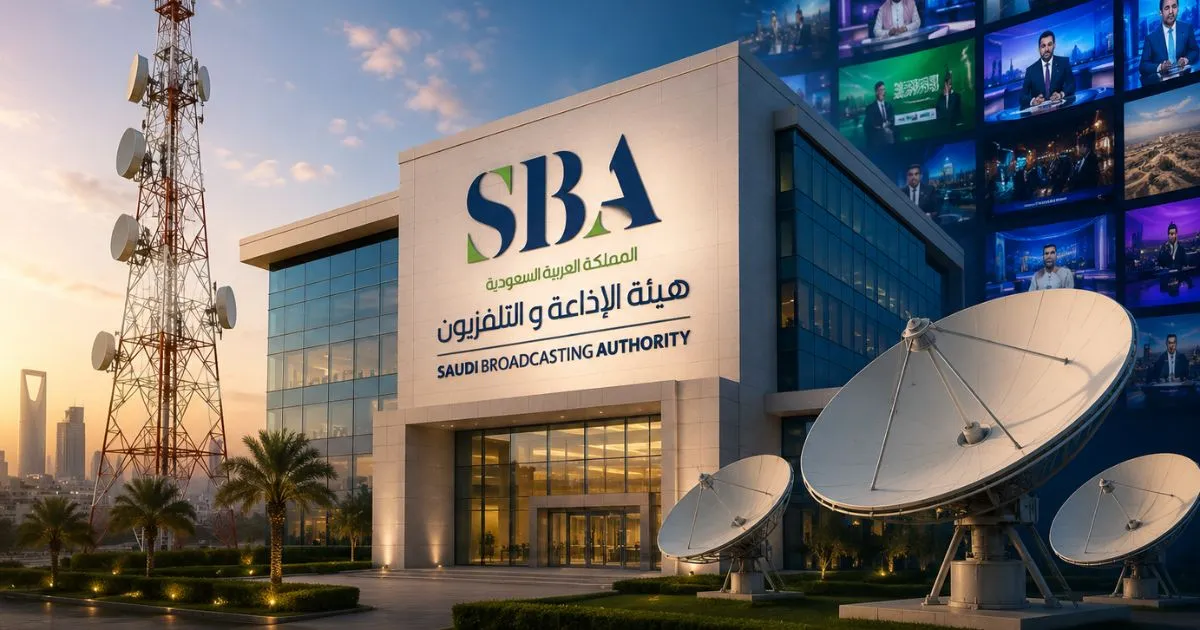
The Saudi Broadcasting Authority, known as SBA, is the body that carries the Kingdom’s message in words and images across the country and beyond it. Its work covers terrestrial and satellite transmission stations, radio and television studios, and the production of programming inside and outside Saudi Arabia.
How the Saudi Broadcasting Authority was established
SBA was created in 2012, after the Council of Ministers approved converting state radio and television activities into a public authority. Its regulations grant it a public legal personality and administrative independence, with an independent budget issued by Royal Decree under the same arrangements that govern the state budget. Organizationally it reports to the Minister of Media.
Its headquarters are in Riyadh, and a board of directors chaired by the Minister of Media holds primary authority over its affairs. The board includes representatives from the Ministries of Interior, Foreign Affairs, Finance, and Media, plus a representative of the Communications, Space, and Technology Commission.
Board and reporting lines
That composition matters. Placing Interior, Foreign Affairs, and Finance on the same board keeps broadcasting policy tied to wider state priorities, in a structure comparable to other regulators such as the Ministry of Culture.
SBA channels on television and radio
Several government and official outlets fall under SBA:
- Television: al-Saudiya, SBC, al-Ekhbariya, the Saudi Sports channels, the Quran Channel, and the Sunnah Channel.
- Radio: Quran Radio, Jeddah Radio, Riyadh Radio, Nida al-Islam Radio, Saudia Radio, and the international Saudi stations.
On April 9, 2020, during the COVID-19 pandemic, SBA launched Thikrayat Channel to entertain households under restrictions, rebroadcasting programs and series that defined the generations of the 1980s and 1990s through the early 2000s. Some of those titles, including Tash Ma Tash and later hits such as Shabab Al Bomb, remain reference points for Saudi television.
What the authority does day to day
SBA takes part in local, regional, Arab, and international exhibitions, seminars, conferences, and festivals. It conducts opinion polls, studies, and scientific research to improve its own output, and it buys, rents, and markets recorded radio and television material.
Its on-air talent has become part of public life, from presenters like Abdulkarim al-Muqrin to familiar weather broadcasters such as Hassan Karani.
Objectives behind the authority
The authority exists to communicate state policies, laws, and instructions; to highlight values drawn from Islamic Sharia; to reinforce ethical principles and national unity; and to ensure broadcasting serves national interests alongside economic and social development. Preserving and spreading national and human heritage is part of that remit, which connects to the national policy for the Arabic language and, more recently, to the shift toward digital government services.
Key takeaways
- SBA was established in 2012 and reports to the Minister of Media.
- It operates from Riyadh with administrative independence and its own budget.
- Its networks include al-Saudiya, SBC, al-Ekhbariya and six major radio stations.
- Thikrayat Channel launched on April 9, 2020.
Frequently asked questions
When was the Saudi Broadcasting Authority established?
In 2012, following Council of Ministers approval to convert radio and television activities into a public authority.
Who chairs its board?
The Minister of Media, who is also the official primarily responsible for the authority.
Which television channels does it run?
Al-Saudiya, SBC, al-Ekhbariya, the Saudi Sports channels, the Quran Channel, the Sunnah Channel and Thikrayat.
Where is SBA headquartered?
In Riyadh, where it manages its operations and board activity.
The bottom line
SBA is the single institutional home for Saudi state broadcasting, from Quran Radio to sports coverage. Service listings are available through the Unified National Platform.
