
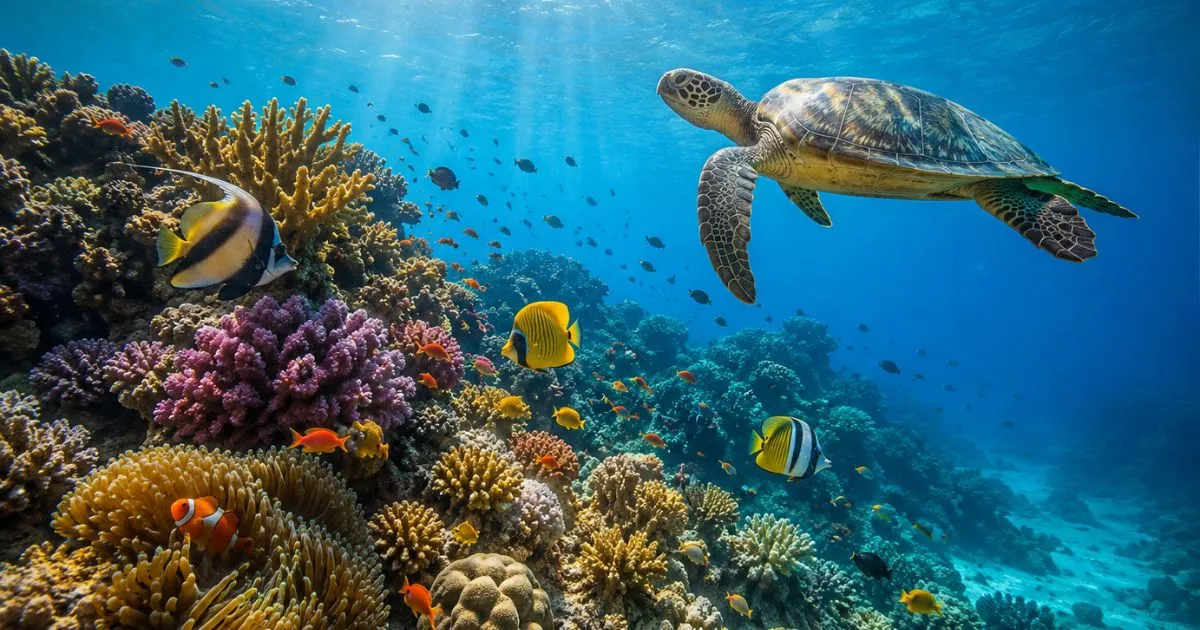
Ask how many coral reef species in Saudi Arabia have been recorded, and the answer splits neatly between two very different bodies of water. The Saudi Geological Survey estimates around two hundred types of coral reefs along the Red Sea, while the Arabian Gulf coasts hold roughly sixty. Together they form one of the richest marine habitats anywhere in the region.
Coral reef species in Saudi Arabia across the Red Sea
The Red Sea carries the larger share by far. Its reefs vary widely in color, shape, and structure, and they spread across long stretches of coastline, around islands, and out into open water. Some sit close enough to the surface that they become visible during tidal movement.
Reef density is especially high near the entrances to the Gulf of Aqaba, particularly in the waters between the islands of Tiran and Sanafir and the Saudi shore. That corridor is one of the reasons the Red Sea ranks among the world’s richest seas for coral. Divers heading for the best beaches in Saudi Arabia often reach reef systems within a short boat ride.
Islands and reef habitats
Island groups act as anchors for reef growth. The waters around Farasan Island, the largest Saudi island in the Red Sea, and quieter spots such as Bayada Island show how reef structures build up in sheltered shallows. These habitats also connect with mangrove zones, which is why the mangrove planting scheme in Jubail matters for coastal ecology on the other side of the country.
Reef types along the Arabian Gulf
Gulf reefs are fewer, about sixty species, and local fishing communities name them by composition and size. The traditional names include al-Fushut, al-Kitaa’, al-Qassar and al-Halat. Some grow as long barriers; others curve into bay-like formations.
Monitoring these waters has become more technical. The smart buoy launched in the Arabian Gulf is one example of instruments now feeding data on water conditions that directly affect coral health.
Why the reefs matter to fishing and tourism
Reefs are nurseries. Fish gather and reproduce around them, which makes reef zones the busiest fishing grounds on both coasts. Fishermen along the shoreline know most of the reefs by name and by season, knowledge passed down long before any survey mapped them.
Tourism has added a second layer of value. Reef diving now sits alongside marine cruise tourism and the wider winter tourism season as a reason visitors travel to the coast. That popularity brings pressure, so access rules and protected zones are part of how the reefs are managed.
Key takeaways
- The Red Sea holds around 200 coral reef types along Saudi coasts.
- The Arabian Gulf holds roughly 60, known locally as al-Fushut, al-Kitaa’, al-Qassar, and al-Halat.
- Reef density peaks near the Gulf of Aqaba entrances, between Tiran, Sanafir and the Saudi coast.
- Reefs drive both fish reproduction and coastal tourism.
Frequently asked questions about coral reef species
How many coral reef species in Saudi Arabia are found in the Red Sea?
The Saudi Geological Survey estimates about two hundred types, spread across the coastline, the islands, and offshore waters.
Are Arabian Gulf reefs different from Red Sea reefs?
Yes. The Gulf holds around sixty species, grouped by local names based on their composition and size, and they often form barriers or bay shapes.
Can coral reefs be seen without diving?
Some Red Sea reefs sit at or near the surface and become visible during tidal movement, though most viewing still happens by snorkeling or diving.
Why are reefs important for fishing?
They create sheltered conditions where fish breed and feed, which is why reef areas support the heaviest fishing activity on both coasts.
The bottom line
Two seas, two very different reef profiles. The Red Sea gives the Kingdom its headline number and its diving reputation, while the Gulf reefs remain a working part of local fishing life. Further detail on national geological surveys is published by the Saudi Geological Survey.
