
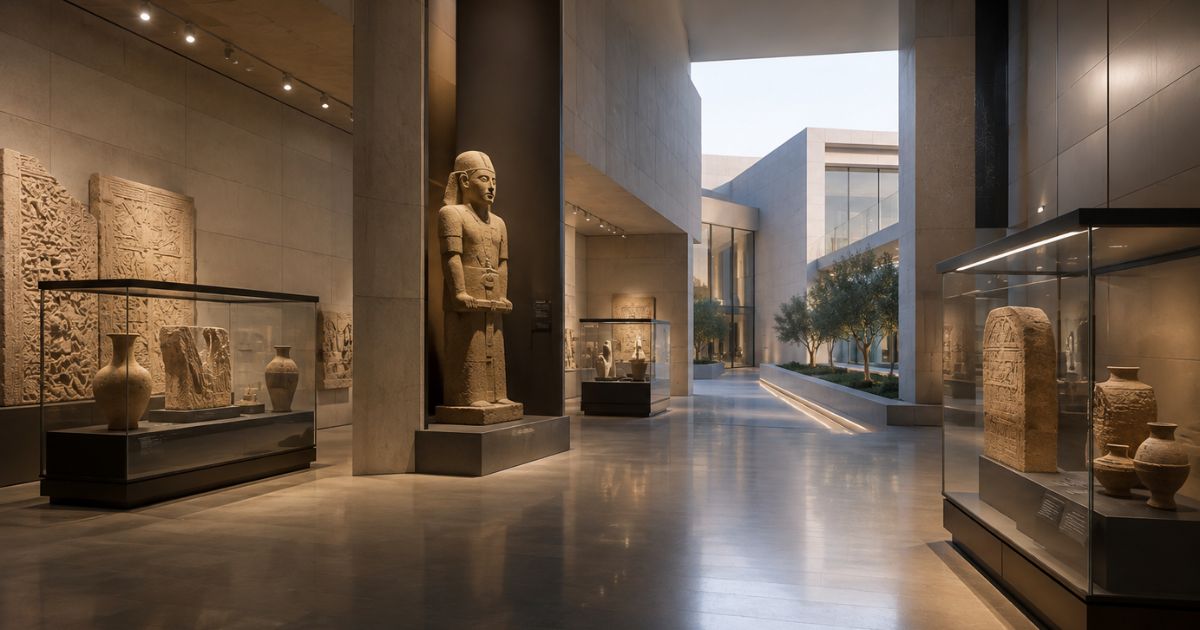
Quick verdict: what the museum sector development strategy is
The museum sector development strategy is the organizational plan for museums in the Kingdom. The Museums Commission, part of the Ministry of Culture, launched it on September 19, 2021.
Its purpose is practical: give the sector room to grow, raise it to international standards, and use museums to present the history and identity of the country.
Strategy at a glance
| Detail | Information |
|---|---|
| Launched | September 19, 2021 |
| Owner | Museums Commission, Ministry of Culture |
| Strategic objectives | Twelve |
| Axes | Cultural field, sector activities, empowerment tools |
Vision and objectives of the museum sector development strategy
The vision positions national museums as inspiring destinations and catalysts for cultural and social engagement among citizens, residents and visitors. The mission is to safeguard national heritage from across the world, promote it, and present it for study, education and entertainment.
Twelve objectives sit underneath. They include enriching institutions and collections, expanding museum reach through partnerships with high-quality institutions, raising visitation among residents and tourists, increasing the sector budget while improving spending efficiency, and establishing contemporary museums in major cities alongside local museums in heritage-rich regions.
Others cover protecting and exhibiting collections to high standards, developing a qualified workforce, securing financial support, stimulating third-sector participation, and issuing licences and regulations that enforce quality. Programme details are published by the Museums Commission.
Three axes of the museum sector development strategy
The first axis is cultural: wider reach, higher visitation, stronger content value and a bigger, better spent budget. The second covers sector activities, meaning construction, care and display of museums and their collections, plus visitor attraction through educational and entertaining experiences.
The third is empowerment tools, which include talent development, licensing, regulatory frameworks, financial support and partnerships. Similar structural thinking appears across the Ministry of Culture and its sister bodies such as the Heritage Commission.
How the commission delivers
The commission encourages institutions, companies and individuals to establish and develop museums. It runs training courses, accredits bodies that issue museum certifications, raises public awareness, and represents the sector in local and international forums.
It also organizes conferences, events and competitions, preserves tangible and intangible heritage for display, and works on communication with investors and stakeholders. That intangible side links closely to Saudi elements inscribed at UNESCO.
Museums being built and upgraded
The strategy strengthens existing institutions such as al-Masmak Palace Museum and the National Museum, and it covers two plans to establish museums across the Kingdom from Ar’ar to Najran and from Abha to Dammam by 2024, with further large and small museums planned through 2030.
First-phase museums include the Tariq Abdulhakim Museum in Jeddah and the Black Gold Museum in Riyadh. The Ministry of Culture also plans a site for the Saudi Museum of Contemporary Art in the JAX District in ad-Dir’iyah, used temporarily until the grand museum opens. Medium-term plans list the Digital Arts Museum, the Royal Arts Complex Museum and the Museum of Prince Mohammed Bin Salman Global Center for Arabic Calligraphy.
Regional museums already show what the model looks like, including the Al-Jawf museum, while sites like Masmak Fort and Diriyah Governorate anchor the capital’s offering.
Jobs in the sector
The commission wants more specialists employed in museums, pointing to international institutions where staff numbers can reach two thousand. Growing the number of museums is treated as a direct route to job creation under Saudi Vision 2030, a pattern also visible in tourism sector workforce planning and in arts education.
Final verdict
Judge this strategy by openings and staffing, not by statements. The named first-phase museums and the workforce target are the measurable parts and they are the ones worth following.
