
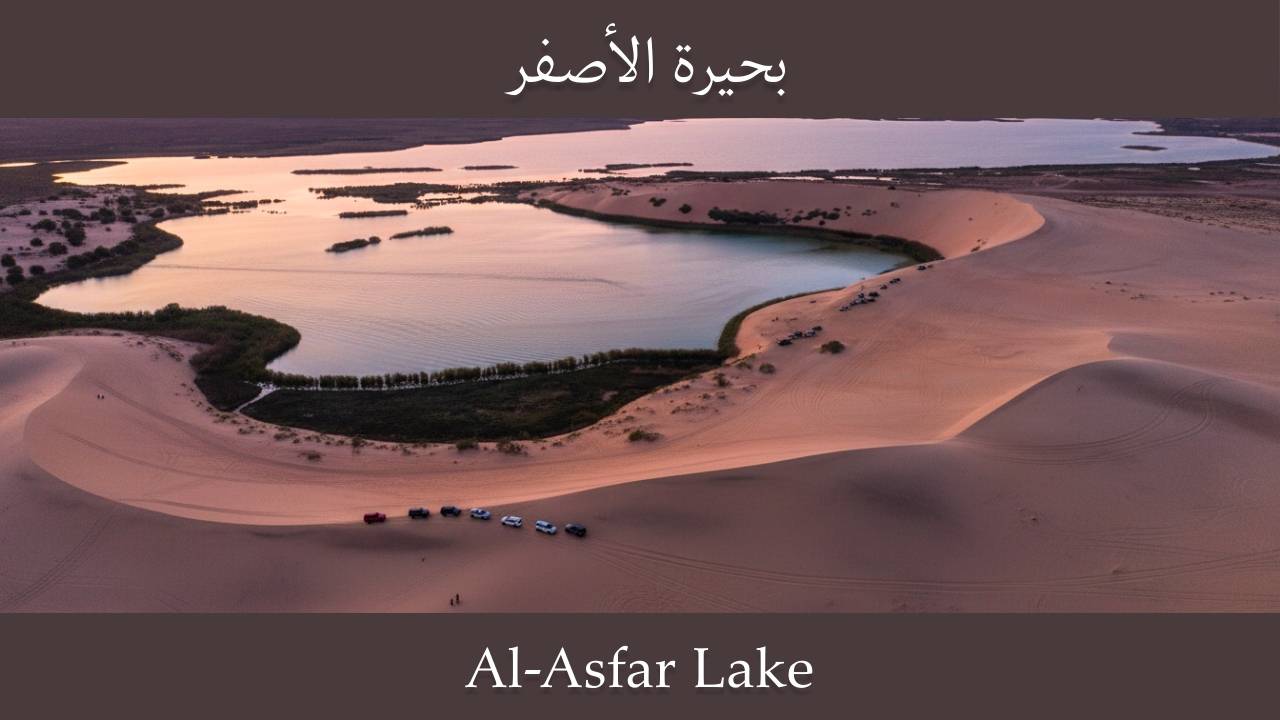
Al-Asfar Lake sits five kilometers east of Umran city in al-Ahsa Governorate, Eastern Province. What makes this lake special is that it is entirely artificial. Instead of being a natural formation, it was created from treated wastewater and irrigation water. Today it stands as the largest body of water of its kind among the sand dunes in Arabian Gulf.
Quick Facts About Al-Asfar Lake
- Coverage area: Twelve kilometers along sand dunes
- Location: Five km east of Umran city, al-Ahsa
- Reserve size: Approximately 326,326,201 square meters
- Status: Natural reserve since 2019
- Type: Artificial lake fed by treated water and irrigation systems
From Desert to Wildlife Haven
Al-Asfar Lake was not built for tourists or recreation. It serves as part of irrigation system that feeds al-Ahsa Oasis, one of world’s most important agricultural areas. The oasis is recognized as a UNESCO natural landmark. What happened over time is that the lake became something much more than its original purpose suggested.
The water created an environment where life thrived. Plants grew around the shoreline. Animals discovered a new habitat in the middle of the desert. Birds began using it as a resting point during migration. The barren landscape transformed into an ecosystem.
Why Birds Matter Here
Al-Asfar Lake sits directly on migration routes for birds traveling between northern and southern regions. Twice each year, thousands of migratory birds land at lake to rest and feed. Species like little loons, white-eared bulbuls and shovelers pass through regularly. The lake is also home to year-round residents and endemic bird species including little Podiceps and moorhens.
This bird activity brought international attention. Scientists and bird watchers recognized the lake’s importance for conservation. The combination of desert landscape, water and plant life created something unique in the region.
The Desert Garden Around the Water
Walking the shores of Al-Asfar Lake means encountering plants rarely seen elsewhere. Calligonum, ferns, anabasis, and tamarisk grow naturally around the water’s edge. These desert plants adapted to the sandy soil and harsh climate. They thrive because the lake provides moisture that does not exist in the surrounding desert.
Beyond birds and plants, the lake supports amphibians, sea turtles, waterweeds and algae. The entire ecosystem functions as an integrated unit where each element supports the others.
Tourism and Recreation
For residents of the Eastern Province, Al-Asfar Lake offers something rare in the desert. Families visit to hike along the twelve-kilometer shoreline. Picnicking on the lake’s edge provides relief from the heat. Camping under the stars attracts visitors seeking outdoor experiences. The contrast between golden sand and turquoise water creates a landscape that feels almost impossible in such an arid region.
The lake works because of how it was engineered. Open drainage systems prevent the area from becoming swampy. The treated water quality remains suitable for recreation and wildlife. The sandy shores drain naturally after rain. Every element was designed to function properly in a desert environment.
Official Protection Arrives
In 2019, the Ministry of Environment, Water and Agriculture recognized Al-Asfar Lake’s importance. They declared it an official natural reserve covering approximately 326 square kilometers. This designation applies environmental regulations to protect the area. The ministry supervises the reserve as part of a larger plan to protect Saudi Arabia’s wildlife and natural resources.
The reserve status means the lake has legal protection. Development is restricted. Environmental standards are enforced. The balance between recreation and conservation is maintained through these official guidelines.
What Makes Al-Asfar Lake Different
Most water bodies in the Arabian Gulf are either natural seawater formations or oases fed by underground springs. Al-Asfar Lake is neither. It is an artificial creation that became a natural habitat. It demonstrates how human infrastructure can support wildlife when designed thoughtfully.
The lake proves that desert regions can maintain ecosystems that attract thousands of species. It shows that even treated wastewater can support healthy plant and animal life. It reveals how irrigation systems can serve multiple purposes beyond farming.
Visit Al-Asfar Lake
If you travel to Saudi Arabia’s Eastern Province, Al-Asfar Lake deserves a spot on your itinerary. The drive from Umran city takes minutes. The experience feels removed from typical desert tourism.
Bring binoculars if you enjoy bird watching. The migration seasons offer best variety. Spring and fall bring waves of different species. Bring a camera to capture the unusual landscape. The contrast between water and sand creates compelling images from any angle.
Plan a full day if you want to explore the entire shoreline. Bring water and sun protection. The desert heat is no joke even near the lake. Camp overnight if possible to experience the lake at sunrise and sunset.
Al-Asfar Lake represents what happens when environmental planning meets practical engineering. It is destination that works on multiple levels: ecological importance, tourism value and agricultural function. That combination makes it one of most interesting destinations in the Arabian Gulf region.
Read More:
- Al-Aridah Governorate Jazan: Became a Healthy City
- Winter Tourism in Saudi Arabia: Amazing Places to Visit
Stay updated
Follow us for latest Guides: