
Introduction of Camel Breeding in Saudi Arabia
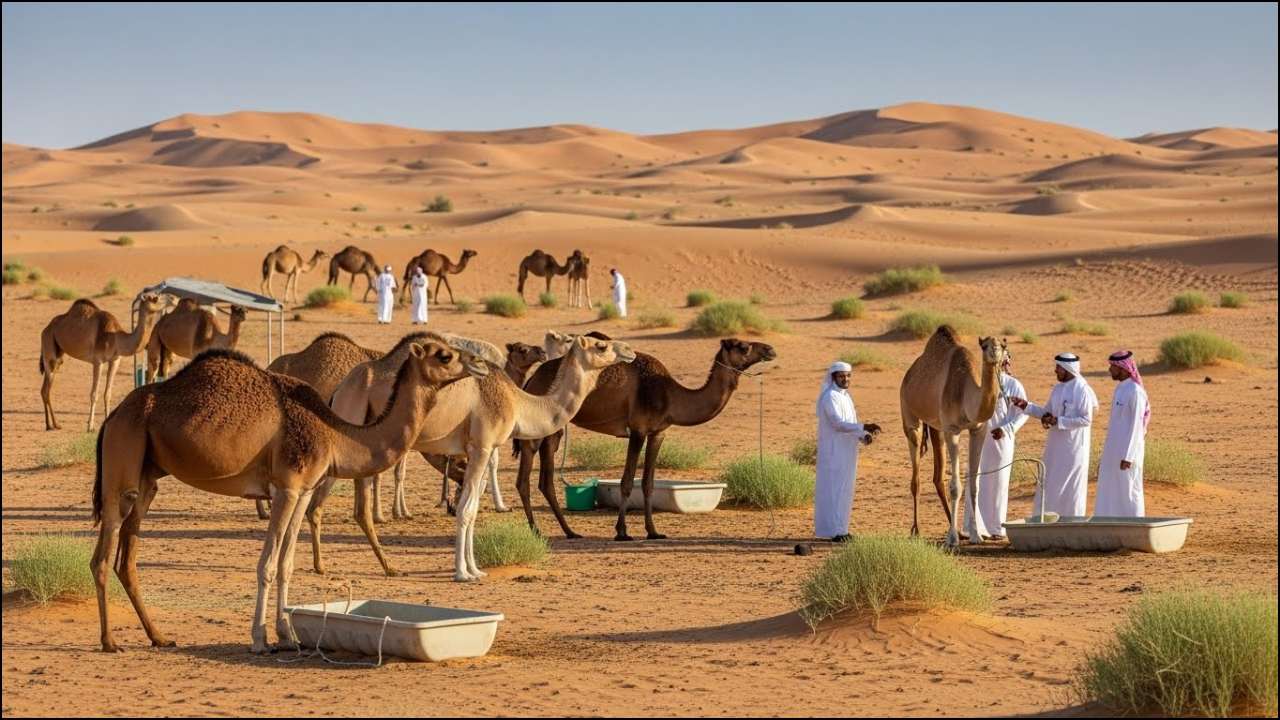
Camel breeding in Saudi Arabia stands as a living practice tied to daily life, food supply and identity. It connects desert history with structured livestock management. Families still care for camels with pride while using health services, records and feeding plans.
Cultural and historical roots
Camels shaped survival across the Arabian Peninsula. Long before paved roads, they carried people, water and goods. Milk and meat sustained households. Hair and hides turned into tents and tools.
Breeding knowledge moved from parents to children. Herd size showed stability and status. Camels symbolized patience and generosity. Many social customs grew around them. Hosting guests with camel milk and dates remains common across the Kingdom.
Camel breeding continues to hold a place beyond income. Festivals, markets and competitions keep traditions active. Even urban families often keep ties to camel ownership through relatives or seasonal visits.
Camel population and economic role
According to records from the Ministry of Environment, Water and Agriculture. Camel numbers reached close to Approx. 1.8 million heads by 2022. Ownership spread among about 80,000 breeders.
Camel meat production reaches about 76,000 tons each year. Per capita consumption averages 2.2 kilograms. These figures place camels as a steady part of food supply, not a seasonal product.
Camels account for about 9 percent of total meat output across the Arab region. Their ability to live in dry zones supports livestock supply where cattle farming faces limits. Lower water needs and strong feed tolerance help reduce pressure on natural resources.
Major camel breeds in the Kingdom
Saudi Arabia hosts several recognized camel breeds. Each breed shows traits tied to region and use.
Majaheem camels
- Found mainly in central and southeastern areas
- Large body size
- Known for higher milk yield
- Often selected for dairy focused herds
Maghateer camels
- Spread across northern and central zones
- Medium body size
- Lower milk output
- Valued for endurance and adaptability
Homor camels
- Common near coastal and western areas
- Similar size and yield to Maghateer
- Adapt well to varied grazing land
These breeds adjust to climate, feed access and movement patterns. Breeders select stock based on milk needs, meat demand and local conditions.
Camel colors and physical traits
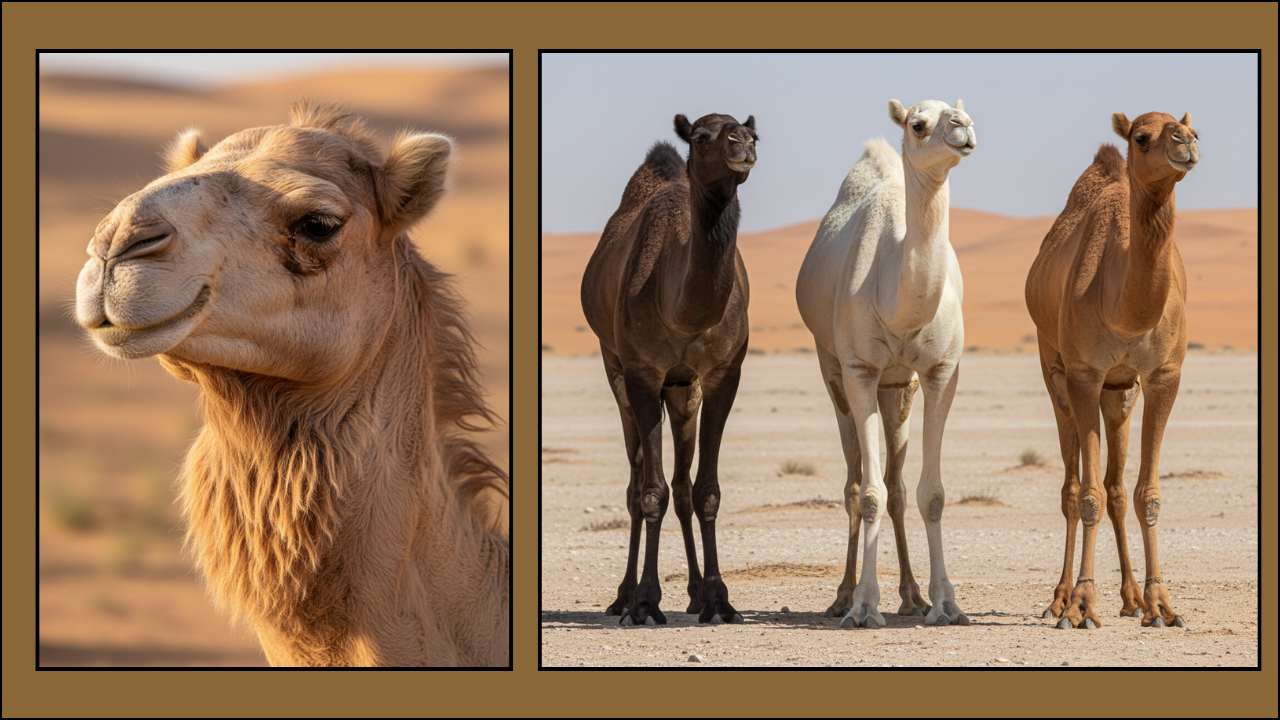
Coat color helps identify breed lines. Color also holds cultural meaning among breeders.
Majaheem colors include
- Crow black
- Lighter black known as Al Malha
- Black mixed with ginger hair called Al Sahba
- Yellow shade known as Al Safra
Maghateer colors include
- Bright white Al Wadah
- Light brown Al Shageh
- Dark brown Al Shaele
These traits depend on genetics and local breeding choices. Breeders track lineage to maintain desired features.
Breeding and reproduction basics
Arabian Camel breeding follows clear seasonal patterns. Growth rate varies by feed, care and climate. Many breeders now rely on veterinary advice to improve outcomes.
Pregnancy lasts 12 to 13 months. Breeding season peaks during January, February and March. Cooler weather supports higher fertility and safer births.
Healthy breeding stock shows:
- Strong body frame
- Clear eyes and coat
- Active feeding behavior
Record keeping supports selection and reduces loss.
Feeding behavior and grazing patterns
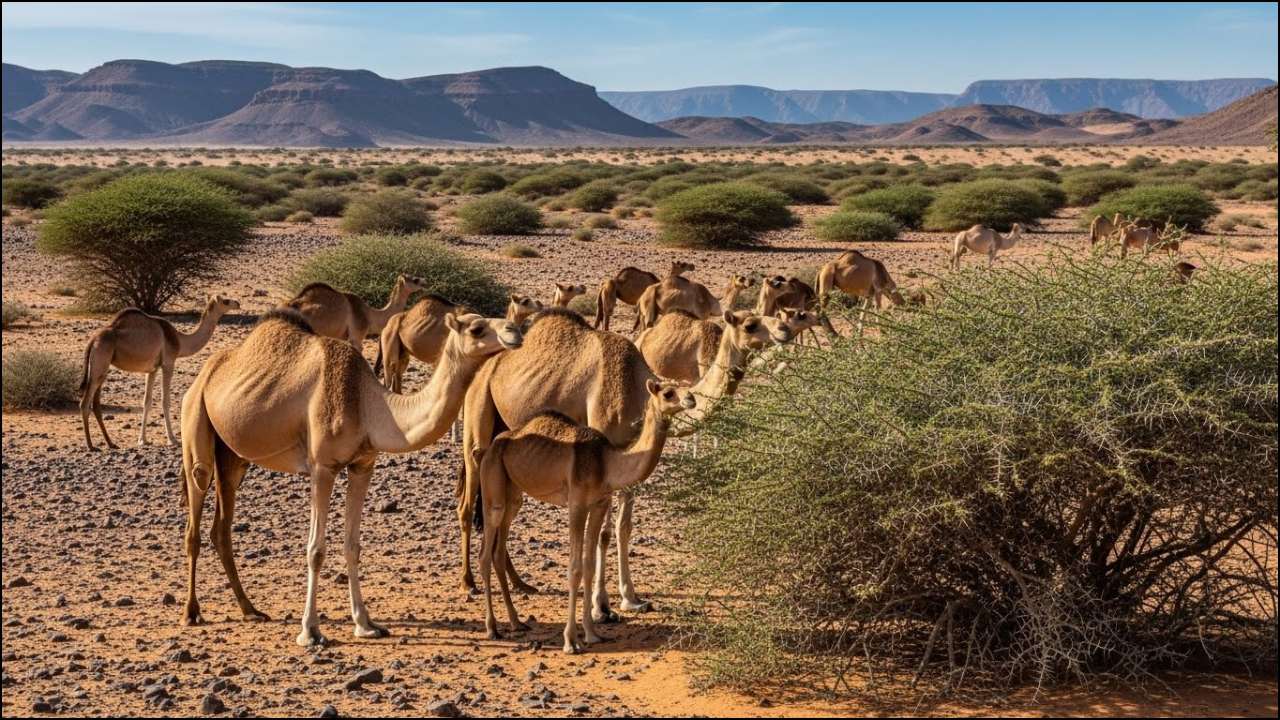
Camels graze plants other livestock avoid. Split upper lips allow intake of thorny and salty shrubs. This feeding style helps balance grazing pressure.
Camels browse higher parts of trees and bushes. Grasslands remain less disturbed. This pattern suits fragile desert zones.
When natural grazing fades, breeders provide concentrated feed. Balanced rations support milk yield, growth and breeding readiness. Water access remains controlled but flexible due to camel tolerance.
Physiological desert adaptation
Camels tolerate heat and water loss better than most livestock. They survive up to two weeks without water. Body water loss near 40 percent does not halt vital functions.
Humps store fat, not water. Fat use reduces heat build up. Specialized sweat glands manage body temperature. Thick coats shield skin from sun exposure.
These traits support long travel, grazing range and survival during drought.
Common camel diseases
Isolation reduces disease spread. Mixing herds during migration or winter camps raises risk.
Viral diseases include
- Smallpox
- Rabies
- Aphthous fever
Bacterial diseases include
- Brucellosis
- Tetanus
- Tuberculosis
- Mastitis
- Septicemia
- Salmonellosis
Parasitic and fungal diseases include
- Trypanosomiasis
- Digestive worms
- Lungworms
- Tick related illness
- Scabies
- Hydatid disease
- Ringworm
Camels show strong resistance but still need regular checks and vaccination.
Meat and milk production
Hashi meat from young camels ranks high among consumers. Lean texture and taste drive demand.
Camel milk holds nutritional and cultural value. Serving milk with dates reflects hospitality across Saudi homes.
Milk output depends on:
- Breed type
- Health status
- Feed quality
- Milking routine
High yielding camels show strong appetite and healthy udders.
Government support and sector growth
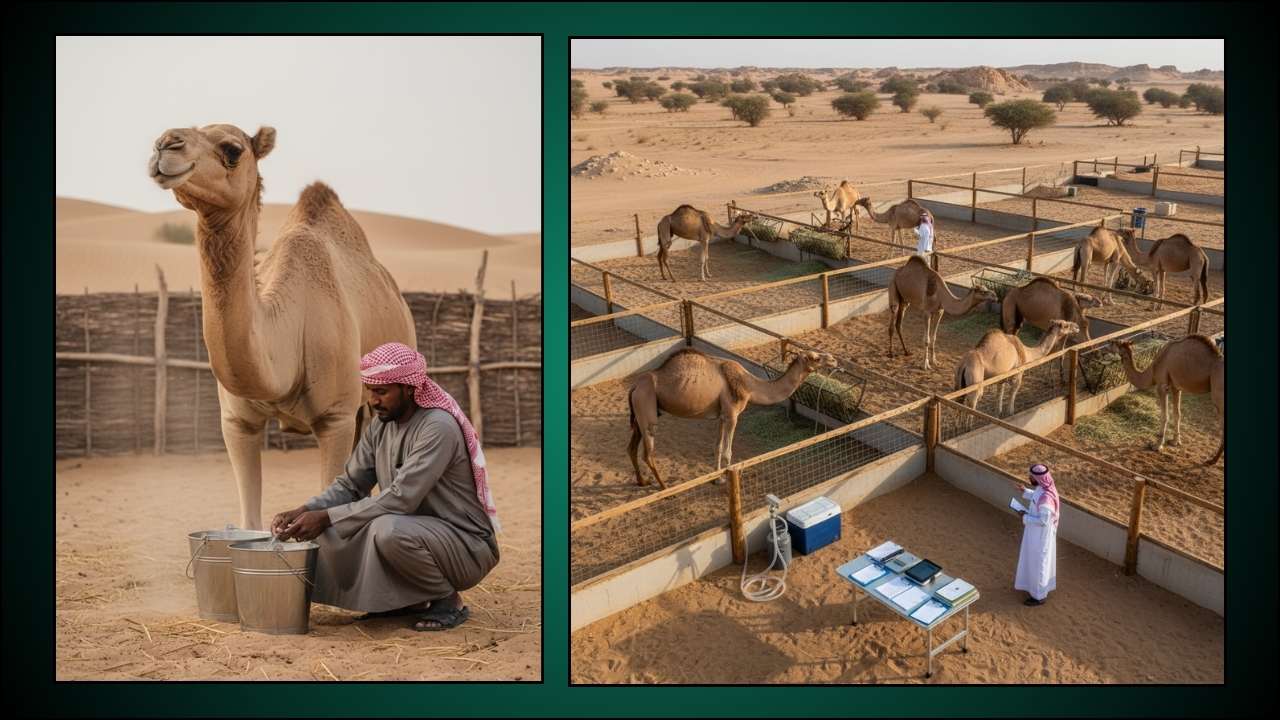
The Saudi government invests in camel welfare and production. Programs aim to protect breeders and animals.
Key efforts include:
- Disease prevention through Weqaya Center
- Genetic research via Genome Lab
- Breeder data management through Anaam Platform
- Veterinary services across clinics and labs
These services improve health tracking and productivity.
Camel identification and electronic numbering
Electronic chips now identify camels. This system supports safety and planning.
Benefits include:
- Protection from theft
- Reduced road accidents
- Health and vaccine tracking
- Improved breeding selection
Identification strengthens sector stability.
Conclusion
Camel breeding in Saudi Arabia continues to connect past and present. Families preserve customs while using science and regulation. Camels remain part of food supply, culture and rural income.