
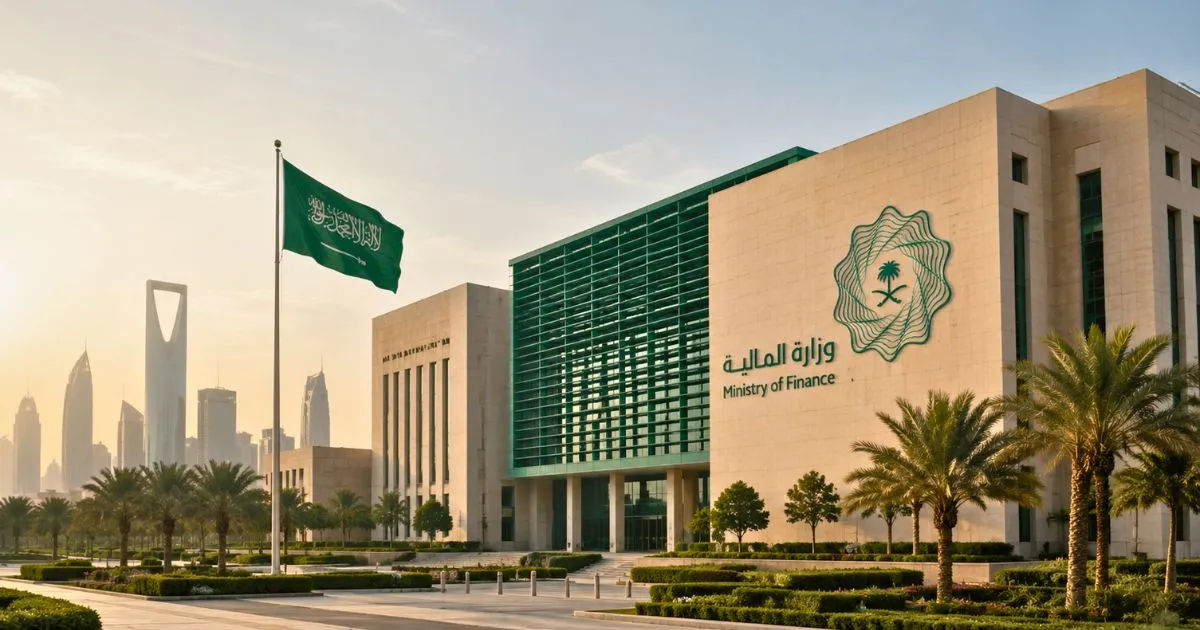
The Saudi Ministry of Finance proposes the fiscal policies and plans that underpin economic stability and growth. It works to keep government resources sustainable, improve how efficiently they are used, oversee implementation and coordinate with monetary and structural policy inside the framework of national development plans.
Its most visible task is preparing and implementing the general budget. Beyond that, it develops financial, tax, and customs policy, supervises how fiscal policy is applied, and builds international partnerships through bilateral and multilateral agreements.
History of the Saudi Ministry of Finance
This is one of the Kingdom’s oldest ministries. It was founded in 1925 during the reign of King Abdulaziz Bin Abdulrahman Al Saud as the General Finance Directorate for Managing Financial Matters, based in Makkah al-Mukarramah Province. As its workload grew it became the General Directorate of Finance in 1928.
A Royal Order in 1932 turned it into the Ministry of Finance, responsible for regulating and safeguarding state funds, managing collection and expenditure, and acting as the central authority on financial matters. In 1954 the Ministry of Economy merged into it to form the Ministry of Finance and National Economy, with headquarters moving to Riyadh. In 2003, economic activity moved to the Ministry of Planning and the ministry took its current name.
Directorates that grew out of the ministry
During the Kingdom’s administrative expansion, a long list of bodies started life under the ministry: the General Directorate of Petroleum and Minerals, Public Works, Customs, Agriculture and Water, Hajj and Endowments and Broadcasting Affairs, the Office of Employees and Retirees, Labor and Workers, the Institute of Public Administration, the Transportation and Communications Agency covering telegraph and postal directorates, the Roads Authority and the Railways. Development funds for real estate, industry, credit, agriculture, and public investment also sat here, as did the Department of Zakat and Income, Retirement, and General Statistics.
Several of those functions now sit with separate bodies, including the Ministry of Economy and Planning.
Structure and leadership
A minister appointed by Royal Order heads the ministry and sits on the Council of Ministers. Work is carried out through deputyships, departments, and branches across the provinces. Over more than eight decades, thirteen ministers have served, the first being Abdullah Bin Sulaiman al-Hamdan. The current officeholder is profiled in our piece on Mohammed al-Jadaan.
Its stated vision is to help the Kingdom become one of the world’s fifteen largest economies by 2030 through a distinctive fiscal system, with a mission built on effective fiscal policy, resource management, and spending efficiency.
Projects and budget work
The ministry has financed major national projects, among them the expansions of the Grand Mosque and the Prophet’s Mosque, the King Fahd Causeway to Bahrain, Princess Noura Bint Abdulrahman University, conference centers, government complexes, shelter centers, border crossings, and residential cities.
Its annual budget announcements are the main fiscal event of the year, covered in our reports on the 2026 budget figures and the approved 2026 budget. Revenue diversification shows up in data on non-oil sector growth, while tax administration reaches businesses through ZATCA e-invoicing and the electronic invoice system.
Key takeaways
- Founded in 1925 in Makkah, it became the Ministry of Finance by Royal Order in 1932.
- It merged with the Ministry of Economy in 1954 and took its present name in 2003.
- Thirteen ministers have served, starting with Abdullah Bin Sulaiman al-Hamdan.
- Its vision targets a top-fifteen global economy by 2030.
Frequently asked questions
What does the Saudi Ministry of Finance do?
It proposes fiscal policy, prepares and implements the general budget, develops tax and customs policy, and manages international financial cooperation.
When was it established?
In 1925 as the General Finance Directorate, becoming the Ministry of Finance by Royal Order in 1932.
Who was the first Minister of Finance?
Abdullah Bin Sulaiman al-Hamdan.
Which major projects has it financed?
Work includes the Grand Mosque and Prophet’s Mosque expansions, the King Fahd Causeway, Princess Noura Bint Abdulrahman University, and border crossings.
The bottom line
Almost every fiscal decision in the Kingdom, from customs duty to the annual budget, runs through this ministry. Official releases are published by the Ministry of Finance.
