
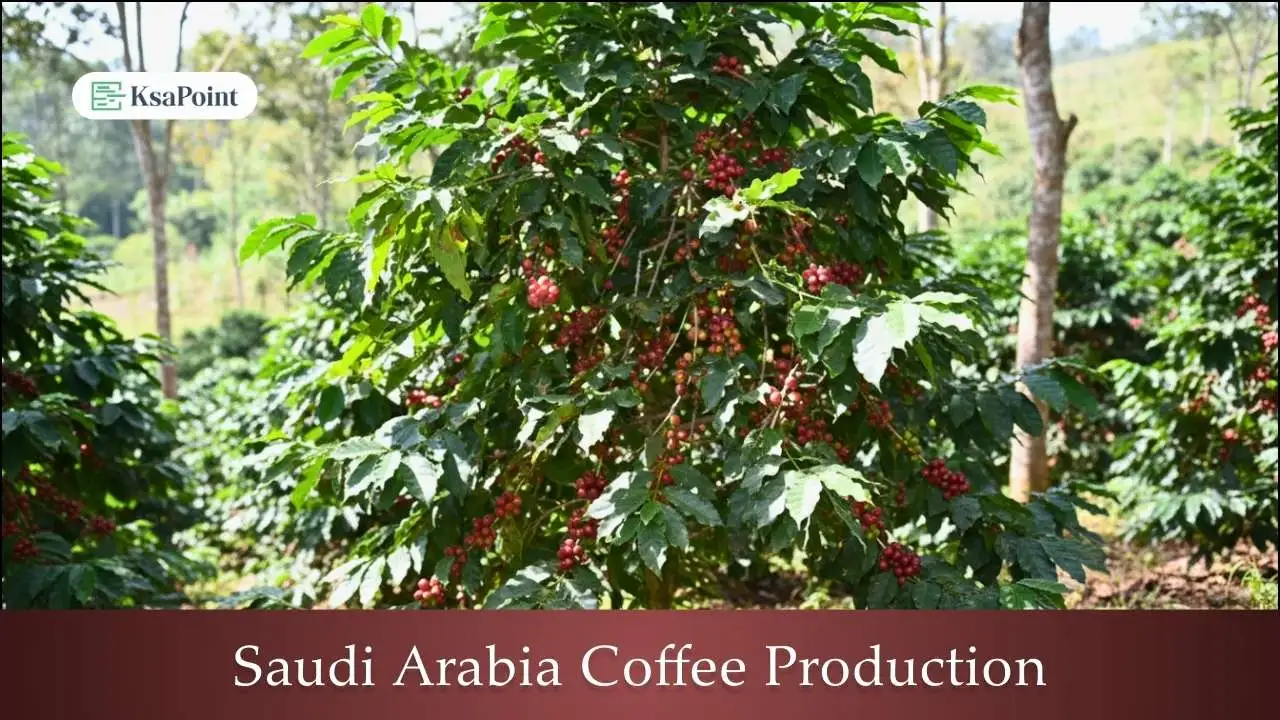
Aseer Province grows around forty thousand coffee trees spread across three hundred farms. These mountainous highlands produce two hundred forty tons of coffee annually, making Aseer the second-largest coffee producer in Saudi Arabia. Understanding how local coffee gets grown reveals a story rooted in culture, heritage and growing global ambition.
Facts About Saudi Arabia Coffee Production
| Aspect | Details |
|---|---|
| Aseer Province Trees | 40,000 trees |
| Aseer Annual Production | 240 tons |
| Total Kingdom Production | 800+ tons yearly |
| National Farms | 2,535 farms |
| Main Regions | Jazan, Aseer, Al-Baha |
| Primary Types | Khawlani and Harari coffee |
| Year Designated | 2022 (Year of Saudi Coffee) |
Saudi Arabia Coffee Production Across Three Mountain Regions
Coffee cultivation concentrated in the mountainous highlands of three provinces. Jazan leads production with over two thousand farms generating more than one thousand tons annually. Aseer follows with its three hundred farms. Al-Baha completes the trio with approximately two hundred fifty farms.
These are not random locations. The terrain matters. Elevation, rainfall patterns and soil composition create conditions where Arabica coffee thrives. The Saudi Coffee Company now operates model farms testing new techniques while maintaining traditional knowledge passed down through generations.
Why Aseer Province Coffee Production Matters
Aseer ranks second among Saudi regions but holds unique importance. The province produces two main coffee varieties that command respect globally. Khawlani coffee carries premium prices due to its oily layer and distinctive aroma. Harari coffee offers another quality option for local consumption and export markets.
The forty thousand trees might seem modest compared to global producers. Brazil grows billions of trees. Ethiopia produces millions. Saudi Arabia operates at smaller scale but competes on quality. Local farmers developed expertise over three hundred years of cultivation. That knowledge transfers through families and now through formal training programs.
Saudi Coffee and National Identity
Coffee production connects directly to Saudi culture. This is not about commerce alone. Saudi coffee preparation represents hospitality, tradition and national identity. The Kingdom serves this beverage at celebrations and social gatherings. It marks important moments.
The government recognized this significance by naming twenty twenty two the Year of Saudi Coffee. The designation honored the crop and acknowledged coffee’s role in national heritage. Plans now include expanding production to fifteen provinces in the southwestern region by twenty thirty.
The Saudi Coffee Company projects increasing annual production from three hundred tons to twenty five hundred tons within the decade. This requires planting five million trees. The investment reaches roughly one point two billion Saudi riyals across ten years.
Current Production Numbers and Growth Trajectory
The Kingdom currently produces over eight hundred tons annually from approximately four hundred thousand Arabica trees. The consumption rate towers above local production. Saudi Arabia drinks eighty thousand tons yearly, creating massive demand for imports.
This gap presents opportunity. Growing local production reduces dependence on imports while supporting rural economies. Farmers receive training on sustainable practices. Model farms demonstrate techniques that increase yields while managing water resources carefully.
The sector development plan targets planting one point two million additional trees by twenty twenty-six. This expansion focuses on areas with suitable climate conditions and adequate water access.
From Heritage Farming to Modern Agriculture
Traditional methods built the industry. Farmers passed skills through demonstration and hands-on experience. This knowledge remains valuable but needs enhancement with technology and scientific methods.
Recent initiatives introduce digital platforms helping farmers monitor crop health, maintain quality standards, and track production data. Training programs teach international best practices. The Saudi Coffee Company Academy offers six-day courses on advanced cultivation and drying techniques delivered by international experts.
This blend of tradition and modern technology creates opportunity. Younger farmers gain access to skills without abandoning heritage methods. The goal involves raising productivity while respecting the land and maintaining coffee quality.
Two Main Coffee Types Produced in Saudi Arabia
Khawlani coffee stands out globally. The distinctive oily layer surrounding the fruit creates its trademark flavor profile. This coffee commands premium prices in international markets. Growing it requires expertise and care. The beans need proper drying and handling to preserve their qualities.
Harari coffee offers another option. Both varieties grow in mountainous regions where conditions allow cultivation at high elevations. These aren’t mass-market commodities. They represent specialty coffee commanding attention from discerning consumers.
The government recently launched the first Jazani specialty coffee brand with dedicated coffee shops showcasing Saudi coffee traditions alongside modern products. These experiences introduce domestic and international customers to what the Kingdom produces.
Read More:
- Coffee Cultivation in Saudi Arabia: Types and Growing Guide
- Top 10 Types of Dates in Saudi Arabia | A Best Taste
Stay updated
Follow us for latest Guides: