
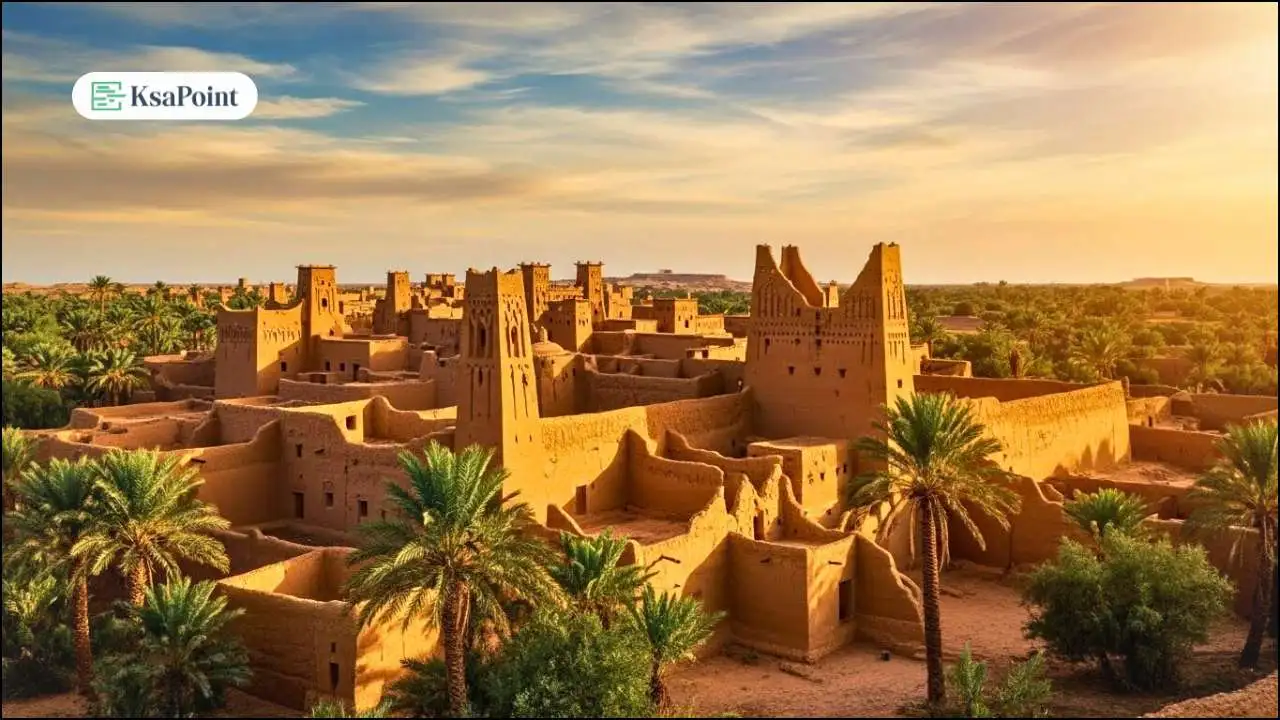
Introduction: Al Turaif District
Al Turaif sits in the heart of Diriyah near Riyadh. Built in the mid-1700s, it stands as one of the world biggest mud cities. Walking through its streets means stepping into Saudi Arabia’s early history. The district housed the leaders of First Saudi State and contains thirteen royal palaces, multiple mosques, government buildings and humanitarian facilities all constructed from mud brick.
In 2010, UNESCO added Al Turaif to its World Heritage Sites list. Visitors can now explore what survived centuries of conflict and neglect. The district opened to the public in 2022 after major restoration work completed in 2018.
Facts About Al Turaif District
| Element | Details |
|---|---|
| Location | Diriyah, Riyadh, Saudi Arabia |
| Built | Mid-18th century |
| Royal Palaces | Approximately 13 |
| UNESCO Status | World Heritage Site since 2010 |
| Key Palace | Salwa Palace (First Saudi State seat) |
| Main Mosque | Imam Mohammed bin Saud Mosque |
| Public Opening | 2022 |
| Museums | 6 major museums |
| Construction Type | Mud brick |
Al Turaif District: Saudi Arabia’s Preserved First State Capital
Al Turaif holds the story of First Saudi State’s leaders. Imam Abdulaziz bin Mohammed bin Saud settled here starting in 1765. Under his rule, the district flourished. Buildings rose from mud brick using techniques passed down through generations. Homes stacked together along narrow streets designed for heat control and defense.
The district demonstrates how mud architecture achieves durability. Thick walls kept interiors cool during desert heat. The mud brick proved strong enough to withstand centuries of weathering. This strength showed during one of history’s pivotal moments for Diriyah.
The Ottoman Siege and Al Turaif’s Survival
In 1818, Ottoman forces led by Ibrahim Pasha surrounded Diriyah for six months. The siege tested everything the city had built. When conventional attacks failed, Ibrahim Pasha aimed cannons at Al-Turaif itself. European engineers operated the artillery, focusing their fire on the district where Imam Abdullah bin Saud ruled.
Al-Turaif was the last fortress protecting Diriyah and the state. The bombardment destroyed much of district. Yet parts survived. The powerful construction meant that even under cannon fire, large sections of buildings remained standing. What was lost could be rebuilt. The core structure held.
After the siege, Al Turaif fell into decay. It remained abandoned for nearly two hundred years. Dust covered its streets. Walls crumbled. The district nearly disappeared from memory until modern restoration efforts began.
Al Turaif Becomes a UNESCO World Heritage Site
Recognition came in 2010 when UNESCO designated Al Turaif a World Heritage Site. It became Saudi Arabia second site on the list after Hegra. The designation acknowledged the district’s global importance and protected it legally.
King Salman bin Abdulaziz al-Saud led restoration efforts when he served as Crown Prince. He recognized Al-Turaif’s value to national identity and tourism. His vision transformed a crumbling ruin into a living museum. Crown Prince Mohammed bin Salman continued this work through the Diriyah Gate Development Authority.
In 2018 King Salman inaugurated the restored district. The goal was turning it into an international tourist and cultural center. By 2022, visitors began exploring the revived streets.
Six Museums Preserving Diriyah’s Story
The Diriyah Museum occupies Salwa Palace, the former government seat. Inside, visual displays, paintings and holograms tell the First Saudi State’s story. You see how leaders governed and administered the state. The palace itself becomes the narrative.
The Social Life Museum shows how ordinary people lived. You find the tools they used daily. The utensils, equipment and household items reveal domestic routines and traditions. Visitors understand what daily life meant during the First Saudi State’s reign.
The Military Museum documents warfare and defense. Weapons displayed here tell stories of battles and sieges. The collection shows how Diriyah tried protecting itself before the Ottoman attack.
The Arabian Horse Museum highlights the royal family’s breeding program. You discover how prized horses were cared for and where they stayed. The stables and facilities reveal another aspect of royal life.
The Museum of Treasury occupies Bayt al-mal, the historical House of Money. Currencies, scales, endowments and trade methods are displayed here. The collection documents how the economy functioned during Diriyah’s prosperity.
The Imam Mohammed bin Saud Mosque stands as the district’s spiritual center. Built during Imam Abdulaziz bin Mohammed bin Saud’s reign, it served as the largest mosque in the First Saudi State.
Why Al Turaif Matters Today
Al-Turaif represents more than old buildings. It shows how leadership shaped a nation. The palaces where decisions were made still stand. The streets where people gathered remain intact. Walking through Al-Turaif connects you to real history.
The mud brick construction demonstrates engineering without modern technology. Every wall, every doorway, every courtyard was built by hand. That achievement deserves respect. Visitors gain appreciation for what human effort can accomplish.
The restoration effort itself matters. Saudi Arabia chose to preserve rather than replace. The government invested in bringing the past forward instead of building anew. This decision honors heritage and teaches future generations.
Visit Al-Turaif District to experience Saudi Arabia’s First State capital. The mud city welcomes visitors ready to explore history through museums, palaces and restored streets. Contact the Diriyah Gate Development Authority for current visiting hours and guided tour options.
Read More:
- Historical Components of Diriyah: A Best Guide
- The 3 Secret Riyadh Historical Castles You Must See
- Riyadh Postal Codes: All Cities Complete List
Stay updated
Follow us for latest Guides: