
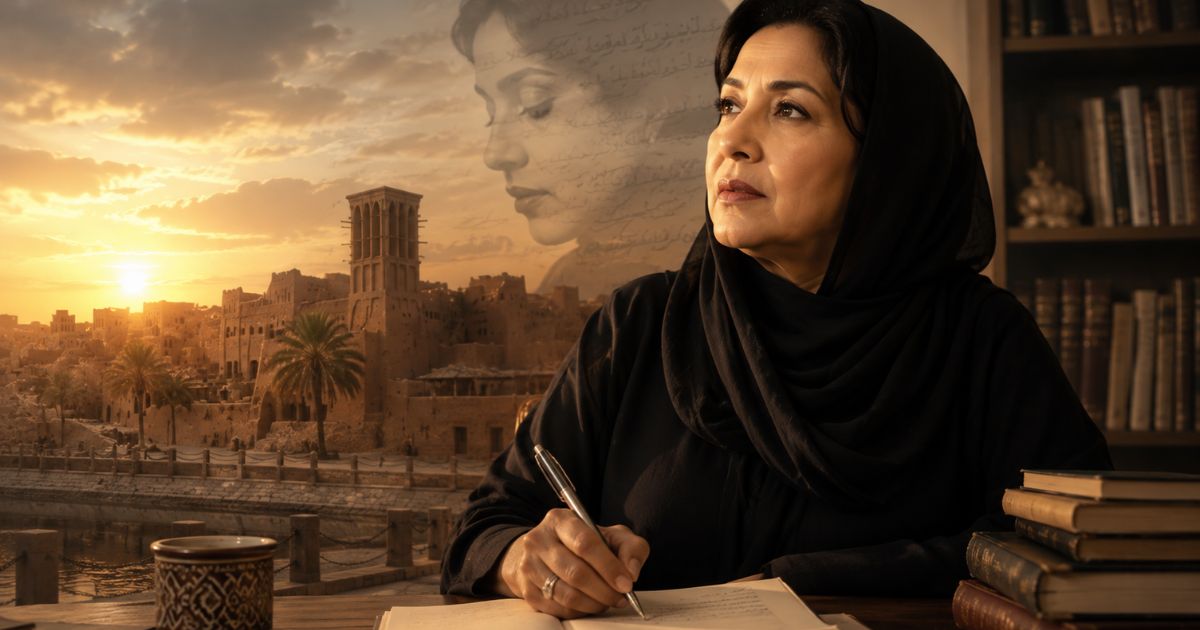
Thurayya Qabil was a Saudi journalist and lyric poet remembered as one of the earliest founders of the modern Saudi lyric poem. Born in 1940 and known as the “Khansa of the twentieth century,” she died in Jeddah on February 4, 2026, at the age of eighty-five.
Early life
Thurayya Qabil was born in Jeddah and received a traditional education from a number of women teachers. She began publishing her poetry under her own real name early in life, a notable choice at a time when many women writers used pseudonyms.
Her family later moved to Lebanon so her father could receive medical treatment. She continued her studies at the National College in Beirut before moving to Cairo, where she kept writing about family issues, especially those affecting children and women.
Journalism career
Qabil published her work in Saudi newspapers including Al-Bilad, Al-Madinah, and Okaz, as well as in Iqra’ magazine and publications outside Saudi Arabia. She became editor-in-chief of Zinah magazine in 1986 and supervised the presidential supplement of Al-Bilad newspaper.
She oversaw the women’s page in Okaz newspaper from 1969 to 1971, then returned to lead a renamed version of the page, “Our Small Society,” until 1973. She also wrote and staged a one-act play at Dar Al-Hanan schools in Jeddah and some of her poems were adapted into Saudi musical works, including “Min Ba’d Mazh wa La’b” and “Jani Al-Asmar.”
Literary works
Qabil published a poetry collection titled “The Weeping Metres,” which received encouragement from King Faisal bin Abdulaziz. She was among the first Saudi women poets to publish a collection under her real name. Her second book, “These Are My Shadows,” gathered a selection of her poems.
Key takeaways
- Thurayya Qabil, 1940 to 2026, was a pioneering Saudi journalist and lyric poet, nicknamed the Khansa of the twentieth century.
- She published the poetry collection “The Weeping Metres” with King Faisal bin Abdulaziz’s encouragement.
- She led women’s pages at Okaz newspaper and served as editor-in-chief of Zinah magazine.
Her legacy connects to Saudi Arabia’s growing investment in literary and creative education, including the newly launched Riyadh University of Arts. Readers can also explore more of her home city in this complete guide to Jeddah.
Coverage of her passing was reported by Al Ekhbariya.
