
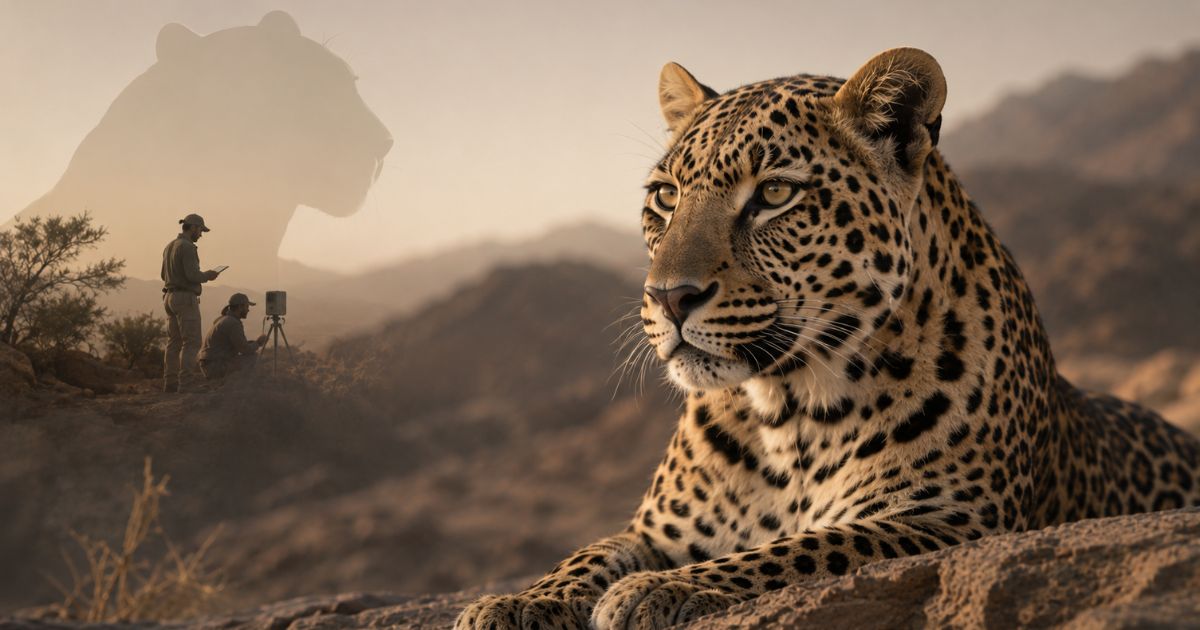
The Arabian Leopard Fund exists because one of the Arabian Peninsula’s most iconic predators is running out of time. Established by the Royal Commission for AlUla, the fund is dedicated to protecting the Arabian leopard, improving its odds of survival and securing the natural prey it depends on. Fewer than two hundred are believed to remain in the wild.
A Species Classified as Critically Endangered
The International Union for Conservation of Nature lists the Arabian leopard as critically endangered, the highest risk category before extinction in the wild. That classification is not a warning about the distant future. It reflects a population already small enough that local losses can be permanent.
Current estimates put fewer than two hundred Arabian leopards in the wild. At that scale, every breeding animal matters and the loss of a single habitat corridor can isolate a group beyond recovery.
What the Arabian Leopard Fund Was Set Up to Do
The fund’s remit is narrower and more precise than general wildlife awareness work. It concentrates on three linked outcomes.
Protecting the leopard itself
Safeguarding surviving animals is the first task, which means reducing direct threats and supporting the conditions under which leopards can breed and disperse.
Protecting the prey base
A predator cannot be conserved in isolation. The fund works to ensure the leopard continues to coexist with its natural prey, because a habitat without prey is not habitat at all.
Sustaining the wider ecosystem
The fund’s goals extend to the ecosystems the leopard relies on, the mountain and desert landscapes that support the whole food chain around it.
Why AlUla Leads This Work
The Royal Commission for AlUla oversees a region where heritage conservation and landscape protection already run together. Its portfolio includes cultural programming such as the Winter at Tantora festival and land art projects like Wadi AlFann in the AlUla desert, alongside long term work on the natural environment.
Placing the fund inside that structure connects species protection to regional planning, tourism management and the visitor economy the Ministry of Tourism is building across the Kingdom.
How the Fund Operates
The Arabian Leopard Fund works in coordination with national, regional and international bodies rather than acting alone. Conservation of a wide ranging predator crosses administrative and national boundaries, so shared research, aligned protection standards and coordinated habitat management are the only realistic route to recovery.
That cooperative model mirrors how Saudi Arabia has approached other environmental commitments, from the Saudi Green Initiative to the natural site protections that sit alongside destinations such as Farasan Island and the Kingdom’s mountain climbing regions.
What Success Would Look Like
Recovery for a critically endangered big cat is measured in decades, not seasons. Meaningful progress means stable or growing wild numbers, healthy prey populations, and habitats connected well enough for animals to move between them. Anything less leaves the species dependent on human intervention indefinitely.
Public awareness plays a real part too. The Arabian leopard has become a recognisable emblem of Saudi conservation, appearing in national campaigns much as heritage symbols appear in festivals and events across the Kingdom and in winter tourism promotion.
Key Takeaways
- The Arabian Leopard Fund was established by the Royal Commission for AlUla.
- The IUCN classifies the Arabian leopard as critically endangered.
- Fewer than two hundred are estimated to survive in the wild.
- The fund protects the leopard, its natural prey and the ecosystems both depend on.
- It works with national, regional and international partners.
Who established the Arabian Leopard Fund?
The Royal Commission for AlUla in Saudi Arabia.
How many Arabian leopards are left in the wild?
Fewer than two hundred, according to estimates based on the IUCN’s critically endangered classification.
Why does the fund focus on prey animals as well as leopards?
Because the leopard’s survival depends on continued coexistence with its natural prey. Protecting the predator without its food source would not work.
The Arabian leopard’s future depends on sustained funding, habitat protection and cooperation that outlasts any single program. Conservation status details are published by the IUCN Red List, and Saudi environment updates are shared on the KsaPoint Telegram channel.
