
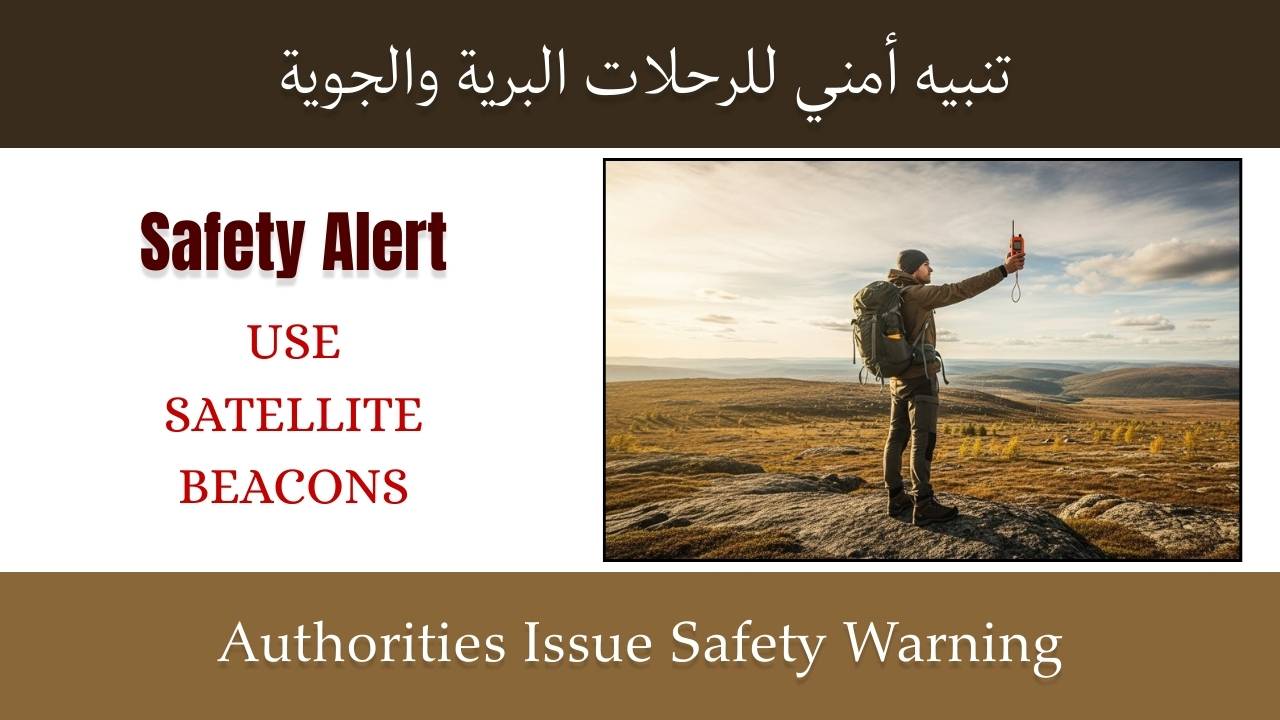
Saudi authorities urged hikers and aviation users to carry personal locator beacons for satellite distress alerts in areas with no network coverage.
Info Box
Who: CSTC and GACA
What: Call to use personal locator beacons
When: Current notice
Where: Across Saudi Arabia
Why: To send distress alerts in areas without coverage
How: Satellite signal sent to national rescue centers
Satellite system covers all regions
CSTC and GACA urged hikers and aviation users to rely on personal locator beacons. The beacons send distress signals through satellite radio links from any point in the Kingdom.
The system was built by CSTC, GACA, and Saudi Air Navigation Services Company. It covers all land, including remote zones.
Direct relay to rescue centers
When a beacon is activated, the Saudi Search and Rescue Center receives the alert. The center passes the alert to the National Security Operations Center at the Ministry of Interior. The alert then moves to the field unit responsible for the area.
CSTC stated that beacon signals reach authorities within seconds.
Devices and licenses
Hikers can obtain devices and licenses from authorized vendors. CSTC lists all sellers of wireless gear on its website.
Missing cases highlight need
The Enjad Search and Rescue Association reported 131 missing cases in deserts in 2021.
Outcomes:
- 100 found alive
- 20 died
- 11 not located
Another yearly report listed 142 missing cases: 100 found alive, 28 dead, 14 not located. In the same period, 13,254 vehicles were stuck in desert areas.
Outlook
CSTC and GACA expect wider use of locator beacons as travel into remote land increases. More guidance will follow through official channels.
Stay tuned for updates.